 홈 > 뉴미디어대안영화제 홈 > 뉴미디어대안영화제 |
| 닫힌 말, 열린 말 Closed, Open, Languages |
 |
 |
 |
|||
 |
|
 |
|||
 |
 |
 |


SCREENINGS
- 8/18(Sat) 12:30 인디스페이스 INDIESPACE
- 8/21(Tue) 14:30 인디스페이스 INDIESPACE
DESCRIPTION
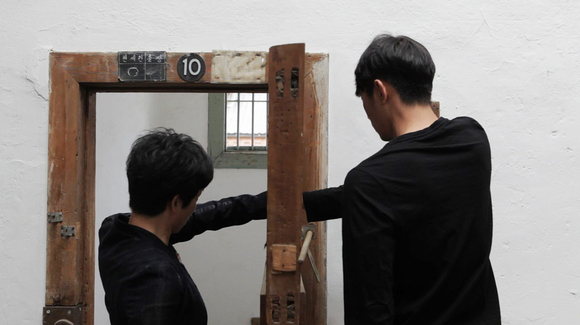
하나의 사고, 행동, 얼굴이 강요되는, 개인이 소멸되는 공간에서 각자의 말은 어떤 형태를 지닐수 있을까? 그 언어들은 어떻게 이 곳에서 빠져나갈까? '서대문 형무소’의 “교화장”은 수감자의 의식 전향 교육이 이뤄지던 장소였다. 그 곳의 천장이 흔들리고 낡은 바닥이 일어나고, 공간을 구성하던 나무자재와 벽돌, 사물들이 진동한다. “교화장”과 연결된 수용실들을 이루는, 크고 작은 틀이 조금씩 비틀린다. 한쪽으로만 강요되던 방향을 비로소 거스르는, 숨죽이던 몸과 말을 상상한다.
In a place where everyone is forced to have the same idea, the same action, and the same face, and where every kind of individuality disappears, in what form can the words of each one exist? How do these words emerge from this place? At Seodaemun Prison in Seoul, there is a space called “Kyohwajang.” During Japanese colonial rule, it housed a program for the ideological and political rehabilitation of detainees. In my video work, the ceiling of this “Kyohwajang” begins to shake. The old floor slowly rises, and the wooden materials, bricks, and things that once composed the place vibrate. The big and small frames that comprise prison cells connected to the “Kyohwajang” are slightly twisted, which represents bodies and words that, after experiencing oppression, ultimately oppose the imposed direction.
|
|
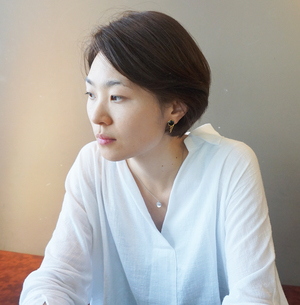
차미혜 이미지, 사운드, 텍스트 등을 실험한다. 서로 다른 세계들의 간극과 만남에 관심이 있다. 개인전 <비스듬>(공간 형, 2017), <가득, 빈, 유영>(케이크 갤러리, 2015) 등을 비롯하여, <Remembering or Floating>(Atelier Nord ANX gallery, Norway, 2017), <Interdisciplinary Art Festival Tokyo>(Japan, 2016), <소실.점>(스페이스오뉴월 이주헌, 2016), <Osmosis Audiovisual Media Festival>(Taiwan, 2016), <아시아 필름 앤 비디오아트 포럼>(국립현대미술관, 2015), <랜덤 액세스 2015>(백남준 아트센터, 2015)등 다수의 그룹전, 영상페스티벌에 참여했다.
|
CHA Mihye Mihye CHA experiments image, sound, text, etc. She is interested in the gap and the encounter between different worlds. Her recent solo/group shows/festivals include <Oblique>(Art Space Hyeong, Seoul, 2017), <Full, Empty, Floating>(Cake gallery, Seoul, 2015), <Remembering or Floating>(Atelier Nord ANX gallery, Norway, 2017), <Interdisciplinary Art Festival Tokyo>(Japan, 2016), <Vanishing Point>(Space Onewall, Seoul, 2016), <Osmosis Audiovisual Media Festival>(Taiwan, 2016), <Asia Film and Video Forum>(National Museum of Modern and Contemporary Art, 2015), and <Random Access 2015>(Nam June Paik Art Center, Korea, 2015).
|
|
|